/Verbetering van de betrouwbaarheid van het turbinebesturingsnetwerk met de IS200VCMIH2CAA/IS215VCMIH2CA VME-busmasterkaart
Verbetering van de betrouwbaarheid van het turbinebesturingsnetwerk met de IS200VCMIH2CAA/IS215VCMIH2CA VME-busmasterkaart
Apr 17, 2026
Kernrol in Speedtronic-besturingssystemen Dit VME Bus Master Communication Controller Board is ontworpen voor Speedtronic gasturbinebesturingssystemen en speelt een cruciale rol in de coördinatie van de communicatie tussen de hoofdcontroller, I/O-modules en het systeembrede IONet. Het bord, dat doorgaans in het eerste slot van het VME-rack wordt geïnstalleerd, fungeert als de primaire buscontroller en zorgt voor een deterministische gegevensuitwisseling tussen alle aangesloten borden. Het dient tevens als de belangrijkste interface naar IONet, waardoor gesynchroniseerde communicatie mogelijk is tussen meerdere lokale en externe I/O-racks.
Belangrijkste technische specificaties Ingenieurs die de systeemcompatibiliteit en -prestaties beoordelen, zullen de volgende parameters bijzonder relevant vinden: Processor: TMS320C32 32-bits DSP Besturingssysteem: QNXPower Voedingsvereisten: +5 V DC (6 A), 28 V DC (bereik 18–32 V) Geheugen voor twee poorten: 32 KB Ingangskanalen: 24 Relaiskanalen: 12 Nominale spanning van de uitschakelsolenoïde: 125 V DC Bedrijfstemperatuur: -40°C tot 70°C Montage: DIN-rail Afmetingen: 168 × 150 × 55 mm Technologie: Oppervlaktemontage Dankzij deze specificaties is de module geschikt voor snelle, realtime industriële besturingstoepassingen, met name in ve veeleisende omgevingen.
Geavanceerde communicatiearchitectuur Een van de bepalende sterke punten van de IS200VCMIH2CAA / IS215VCMIH2CA Het zit hem in de multi-channel IONet-connectiviteit: Drie IONet-poorten ondersteunen onafhankelijke communicatiekanalen (R, S, T), wat de redundantie vergroot. Een secundaire IONet-poort maakt parallelle communicatie mogelijk, waardoor de latentie aanzienlijk wordt verminderd en de doorvoer wordt verbeterd. Er kunnen meerdere I/O-racks over het netwerk worden verdeeld, elk voorzien van een eigen VCM-module voor gesynchroniseerde gegevensuitwisseling. Deze architectuur is met name waardevol in gedistribueerde besturingssystemen (DCS) waar externe I/O naadloos moet samenwerken met centrale controllers.
Functionele vaardigheden voor ingenieurs Het bestuur vervult diverse cruciale functies: VME Bus Master Control: Beheert en prioriteert de gegevensstroom over het backplane. Taakcoördinatie: voorkomt communicatieconflicten door middel van intelligente data-arbitrage. Controller-I/O-interface: zorgt voor nauwkeurige realtime-uitvoering van commando's en feedback. Datapakketbeheer: Routeert en verwerkt inkomende/uitgaande signalen efficiënt. Bordidentificatie en -adressering: wijst automatisch adressen toe voor gestructureerde communicatie.
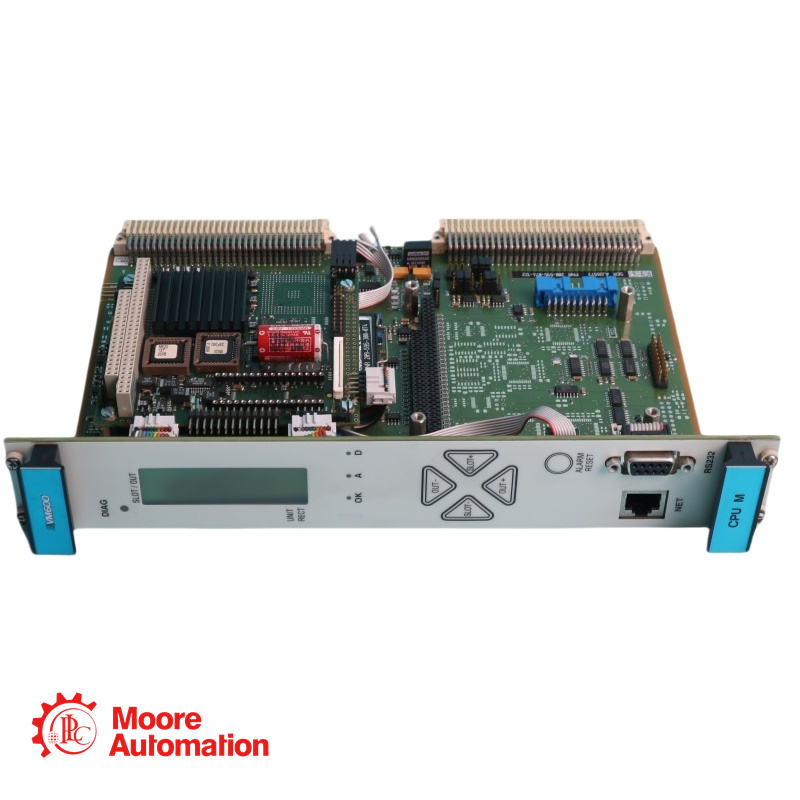
Hardwareontwerp en interfacefuncties Het bord is voorzien van een robuuste interface aan de voorzijde, ontworpen voor praktisch gebruik in het veld: 3 × IONet-connectoren voor netwerkcommunicatie 1 × Seriële poort (veilige schroefverbinding) Resetknop voor snel systeemherstel LED-indicatoren (4 groepen) voor realtime diagnose Intern is op de printplaat meer dan 40 IC's (waaronder FPGA-componenten) geïntegreerd, samen met condensatoren, weerstanden, spoelen en transistoren, wat zorgt voor een hoge verwerkingscapaciteit en signaalintegriteit.
Inzichten in technische toepassingen Voor ingenieurs die werken aan turbinebesturing of industriële automatisering Bij upgrades kunnen verschillende best practices de prestaties van deze module maximaliseren: Gebruik dubbele IONet-kanalen voor redundantie in kritieke processen om enkelvoudige storingspunten te voorkomen. Optimaliseer de rackconfiguratie door duidelijke adresseerschema's toe te wijzen die worden beheerd door de VME Bus Master. Controleer de LED-diagnostiek regelmatig om communicatiestoringen in een vroeg stadium op te sporen. Zorg voor een stabiele stroomtoevoer (met name 5V DC bij 6A) om communicatieproblemen te voorkomen. Gebruik parallelle IONet-communicatie in omgevingen met veel dataverkeer om de latentie te verminderen.
Conclusie Als een cruciale communicatie-infrastructuur in Mark VI-systemen, de IS200VCMIH2CAA/IS215VCMIH2CA Het garandeert een snelle, betrouwbare en gesynchroniseerde gegevensuitwisseling tussen turbinebesturingsarchitecturen. De combinatie van geavanceerde verwerking, redundante netwerken en een robuust hardwareontwerp maakt het een essentieel onderdeel. automatiseringscomponent Voor ingenieurs die zich richten op het waarborgen van operationele continuïteit en systeemintegriteit in veeleisende industriële omgevingen.



 IPv6 NETWERK ONDERSTEUND
| Sitemap
| XML
| Voorwaarden
| Privacybeleid
IPv6 NETWERK ONDERSTEUND
| Sitemap
| XML
| Voorwaarden
| Privacybeleid
 MAIL US
 CAIL US



 Tell Us Your Needs !